Sensing + grounding
Fuse vision, audio, mmWave, environmental sensors, and device events into evidence tied to real rooms, people, and objects.
 AI-native housing systemslivelargetech.com
 AI-native home
LiveLarge is building a persistent intelligence layer for the physical home—one that understands residents and space, remembers change, coordinates devices, and enables robots to act with context and permission.
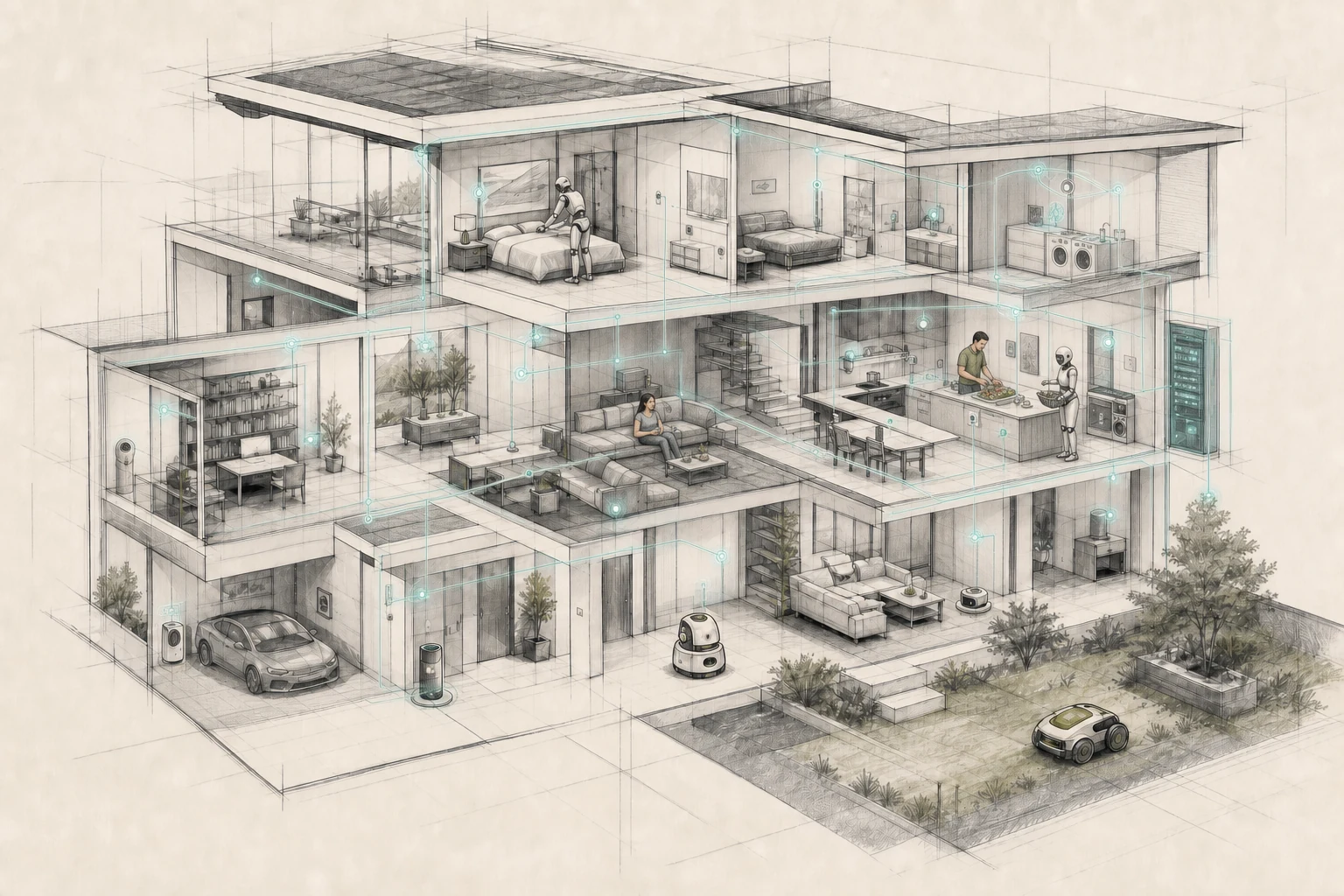
The house is not a collection of smart devices.
Today, every device sees only its own sensors, and every robot enters a home almost blind. HomeOS creates the missing shared layer: a complete semantic spatial Home Model, long-term Home Memory, identity and permission, planning, execution, and verification.
Fuse vision, audio, mmWave, environmental sensors, and device events into evidence tied to real rooms, people, and objects.
Maintain a continuously calibrated semantic spatial model of the entire home—not isolated device states or a single camera view.
Remember identity, state, routines, changes, and confidence over time, with retrieval, correction, replay, and evaluation.
Turn intent into permission-aware plans, coordinate execution, verify physical outcomes, recover from failure, and write results back.
Give people, devices, services, and robots one understandable way to ask, clarify, act, report, and remain under user control.
Closed-loop household intelligence means every action is grounded, authorized, executed, verified, and written back—so the home becomes safer and more capable with use.
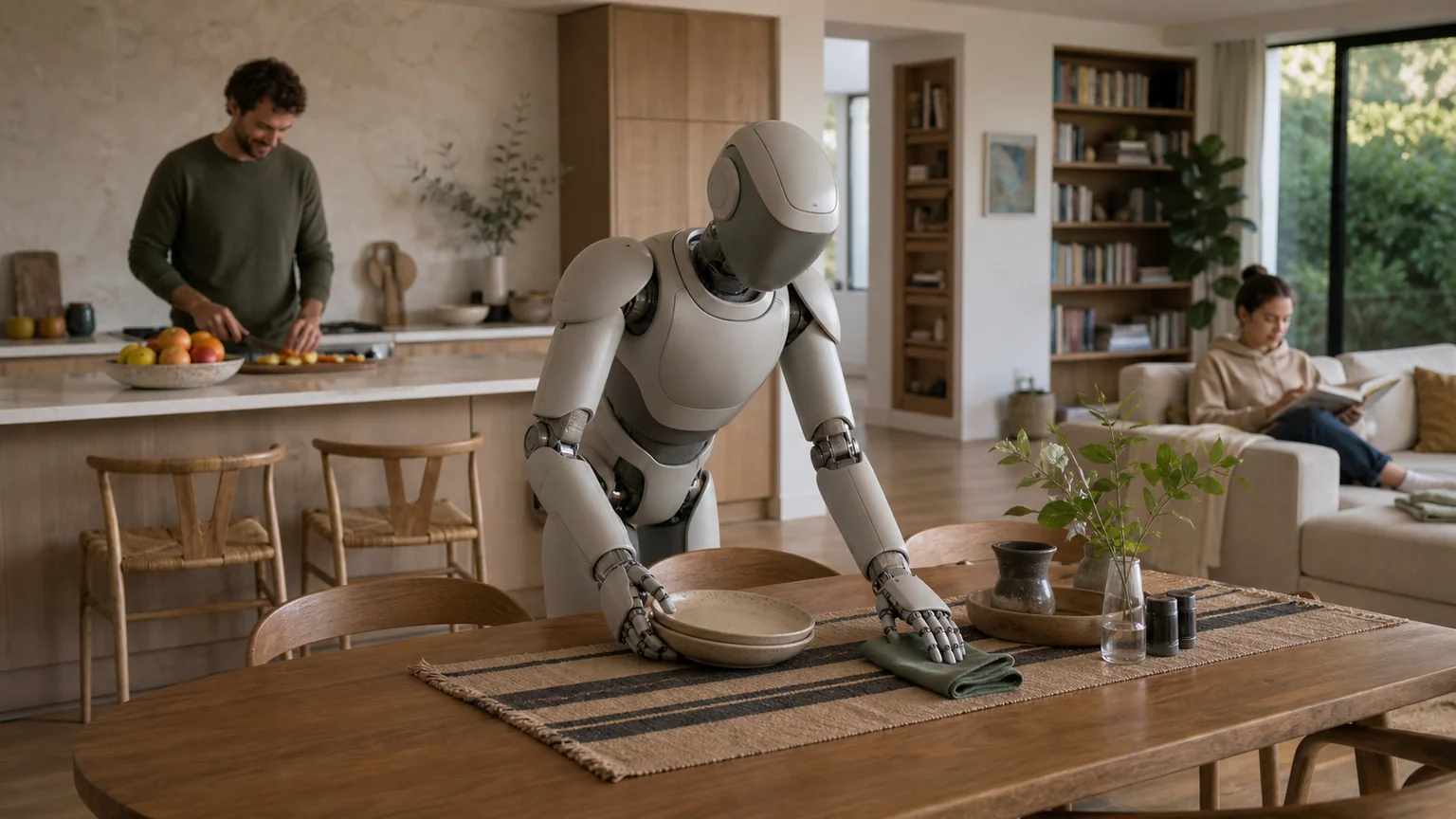
A capable humanoid robot brings locomotion, manipulation, perception, and its own local planner. But the body alone still does not know this home's people, object history, device state, privacy rules, or what ‘done’ means to the resident.
HomeOS translates a resident's intent into a synchronized task contract: who and what are involved, where to act, what is allowed, which devices and services are available, and how completion will be verified.
The robot can focus on physical execution while HomeOS maintains household context, authority, coordination, and memory.The home is not a backdrop. HomeOS gives embodied agents the spatial model, memory, permissions, device state, and success criteria they need to work safely across real life.
Person, object, and device IDs; current location, state, movement, affordances, confidence, and evidence.
Map version, coordinate frame, room topology, target pose or region, reachable areas, and dynamic obstacles.
Relevant Home Memory, recent changes, and the live state of household devices and services.
Authorization scope, privacy boundaries, forbidden zones and actions, confirmation requirements, and safety policy.
Task ID, structured goal, constraints, dependencies, validity, completion conditions, fallback, and recovery.
Accepted, running, paused, completed, or failed; pose, progress, evidence, exceptions, verified outcome, and write-back.
Tell us what you have built, which part of the system you want to own, and why intelligence should leave the screen.
TeamCore engineering teams in Guangzhou and Beijing
ScopeSeniority and role shaped around system ownership
ProcessWe reply with team, location, and interview details when there is a fit